
New high-transmission privacy with patented technology delivers about 12% higher transmission than standard privacy film; new on-demand platform cuts a single Eyesafe film to fit nearly any device
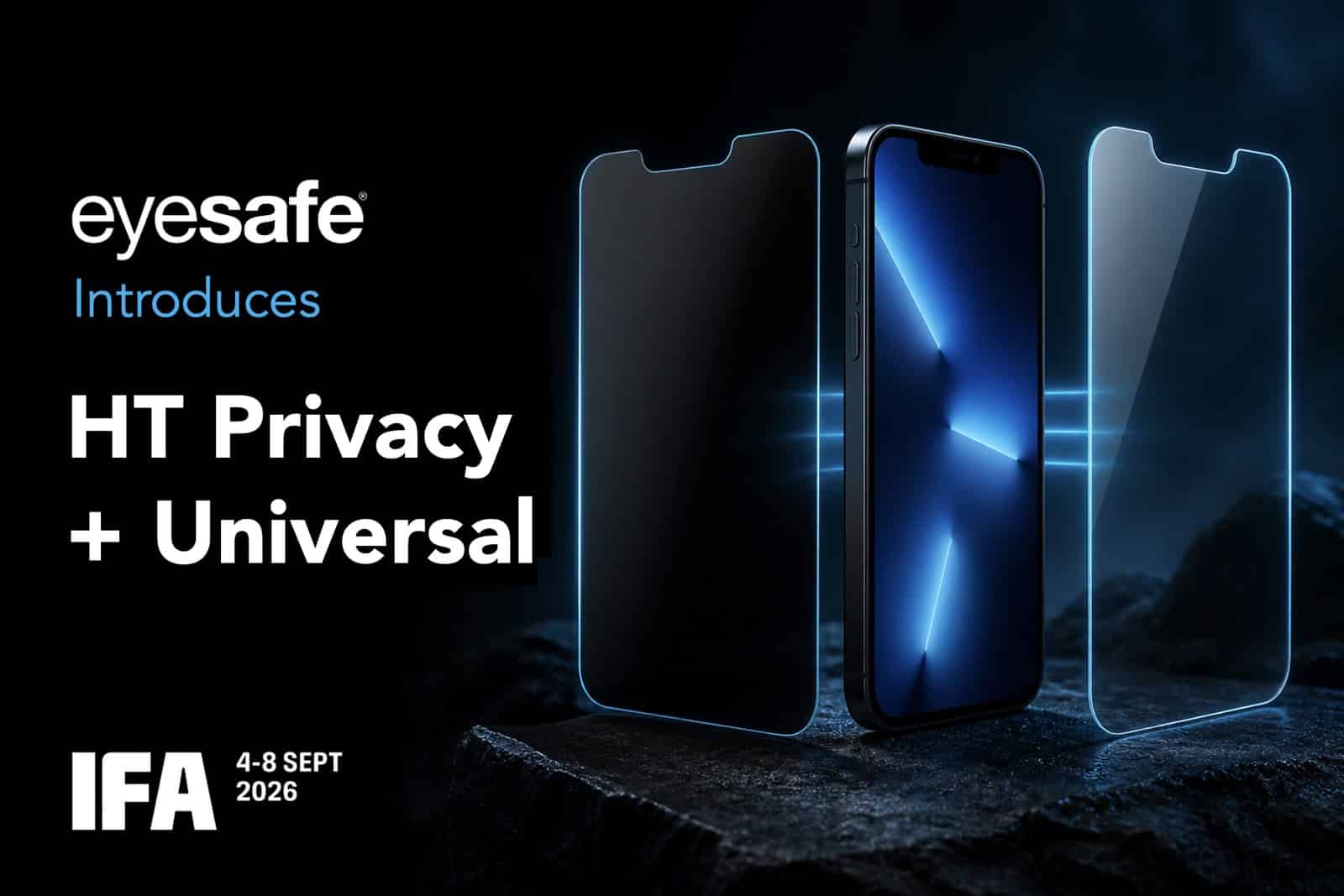
MINNEAPOLIS and BERLIN — September 2, 2026 — Eyesafe, the global leader in display health and screen protection technologies, today introduced two additions to its screen protection platform at IFA 2026: Eyesafe® HT Privacy, a high-transmission privacy screen technology, and Eyesafe® Universal, an on-demand screen protection platform precision-cut to fit a wide range of devices.
Together, the two introductions move screen protection beyond physical defense of the display — toward patented technologies designed to improve privacy, optical performance, device coverage and the experience of the screen itself.
 Eyesafe HT Privacy: Privacy. Brighter.
 Eyesafe HT Privacy: Privacy. Brighter.
Privacy screens are an increasingly important layer of protection as smartphones carry banking, business and personal information into public spaces. But conventional privacy screens have always demanded a familiar trade: reduced display brightness.
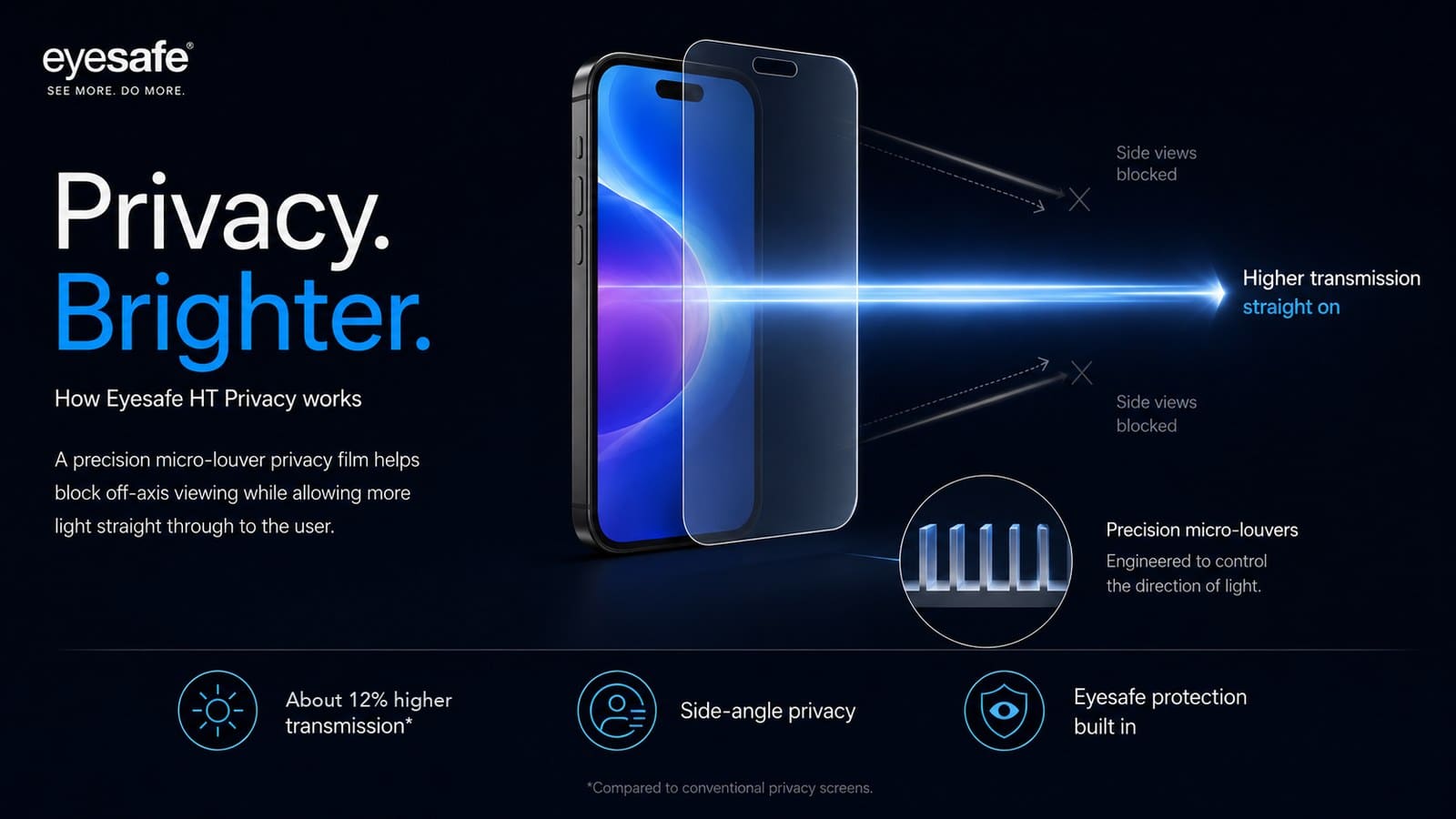
Eyesafe HT Privacy is engineered to improve that equation. In Eyesafe laboratory measurements across leading smartphones and industry reference displays, HT Privacy delivered 74–75% average light transmission versus 66.3% for standard privacy film — about 12% higher — while maintaining effective side-angle privacy and showing no visible color shift on any display tested.*
HT Privacy incorporates patented Eyesafe® technology, designed to improve transmission — uniting visual privacy, a brighter head-on picture and Eyesafe protection in a single film.
“Privacy screens have historically asked people to give up part of the display experience in exchange for privacy,” said Justin Barrett, CEO of Eyesafe. “HT Privacy improves that equation: a brighter head-on picture, side-angle privacy maintained, and patented Eyesafe protection built into the film. It is a better approach to a category millions of people rely on every day.”
Learn more about HT Privacy at eyesafe.com/htprivacy.
Eyesafe Universal: One film. Every screen.
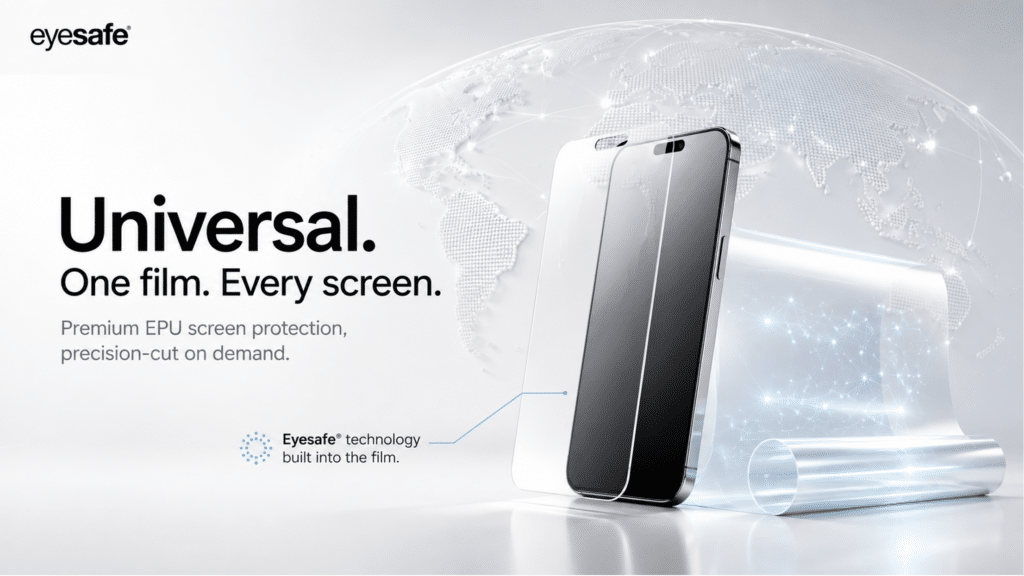
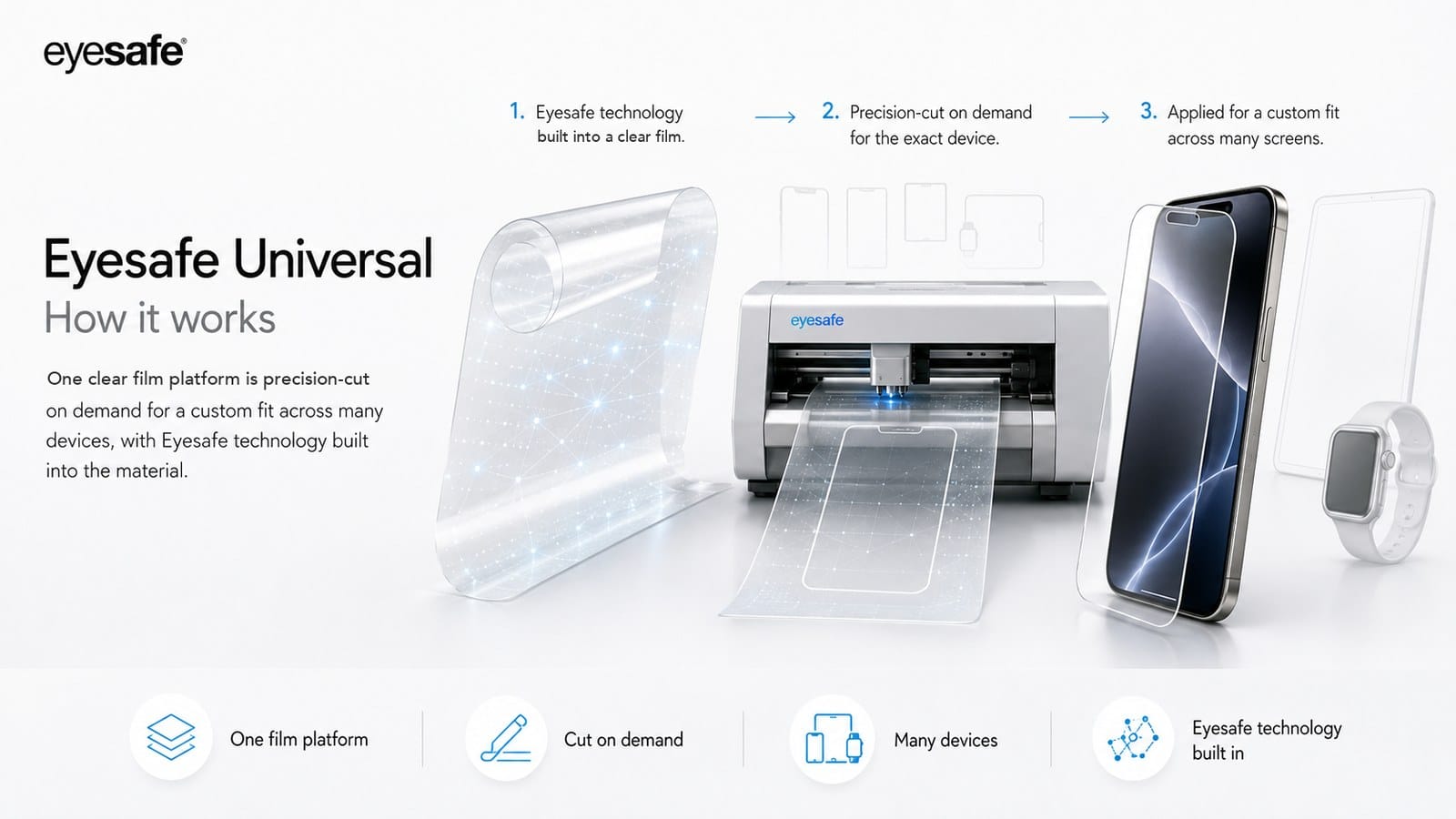
Eyesafe Universal is a new on-demand screen protection platform built around a premium, optically clear film and precision cut-to-fit technology.
Conventional screen protection programs require separate pre-cut inventory for every device model. Eyesafe Universal replaces that wall of SKUs with a single film platform, precision-cut on demand for compatible smartphones, tablets and other displays — at the retail counter or in the service channel, including devices released after the film ships.
Eyesafe technology is integrated directly into the film material, so the protective layer itself delivers Eyesafe light-management performance while maintaining clarity, touch response and a self-healing surface.
“Universal changes the economics and logistics of screen protection,” Barrett said. “Instead of forecasting and stocking a separate protector for every device, partners start with one advanced film platform and create the right fit on demand. Retailers get flexibility; consumers get a premium product with Eyesafe technology built into the material.”
Eyesafe Universal is available to partners now through evaluation programs, with volume production scaling through 2027.
A Broader Platform for Advanced Screen Protection
The introductions build on Eyesafe’s expanding portfolio of display technologies for smartphones, tablets, laptops, monitors and TVs, organized around the company’s graded technology families:
- RPF® — Radiance Protection Factor addresses the high-energy blue-light region, including the wavelengths around 435–440 nm.
- CPF — Circadian Protection Factor addresses the 480–500 nm range associated with circadian sensitivity.
Screen protection products can be engineered with RPF, CPF or combined performance, giving OEMs and accessory brands a measurable, graded way to build differentiated products for specific devices, markets and consumers — with advanced optical performance built into the protection itself rather than added as a secondary feature.
Built for OEMs, Brands and Retailers
Eyesafe develops screen protection technologies for integration into products from device manufacturers, accessory brands, carriers and retailers worldwide. HT Privacy addresses the optical performance of premium privacy products; Universal addresses the operational challenge of serving an increasingly fragmented device market. Options are available for brands and retailers in CPF or RPF technology variants.
Both are designed around the same principle: screen protection should do more than protect the surface of a device. It should improve the experience of the screen underneath it.
Eyesafe is meeting customers and partners at IFA 2026 in Berlin, September 3–6. Learn more at eyesafe.com/IFA2026, eyesafe.com/htprivacy and eyesafe.com/universal. Samples, technical data sheets and demonstrations are available to qualified partners.
About Eyesafe
Eyesafe is the global leader in display health, screen protection and advanced light-management technologies, with a portfolio of more than 100 patents and technology shipped in over 350 million devices worldwide. The company works across the consumer electronics ecosystem — device manufacturers, display makers, accessory brands, carriers and retailers — to develop the technologies, standards and products that improve how people experience digital displays.
* Eyesafe measurement, August 2026: average transmittance 400–780nm, Eyesafe HT Privacy vs standard privacy film, measured across leading smartphones and industry reference displays; color difference ΔE2000 ≤1.9 on all displays tested. As with all privacy filters, brightness is reduced relative to an unprotected display.