
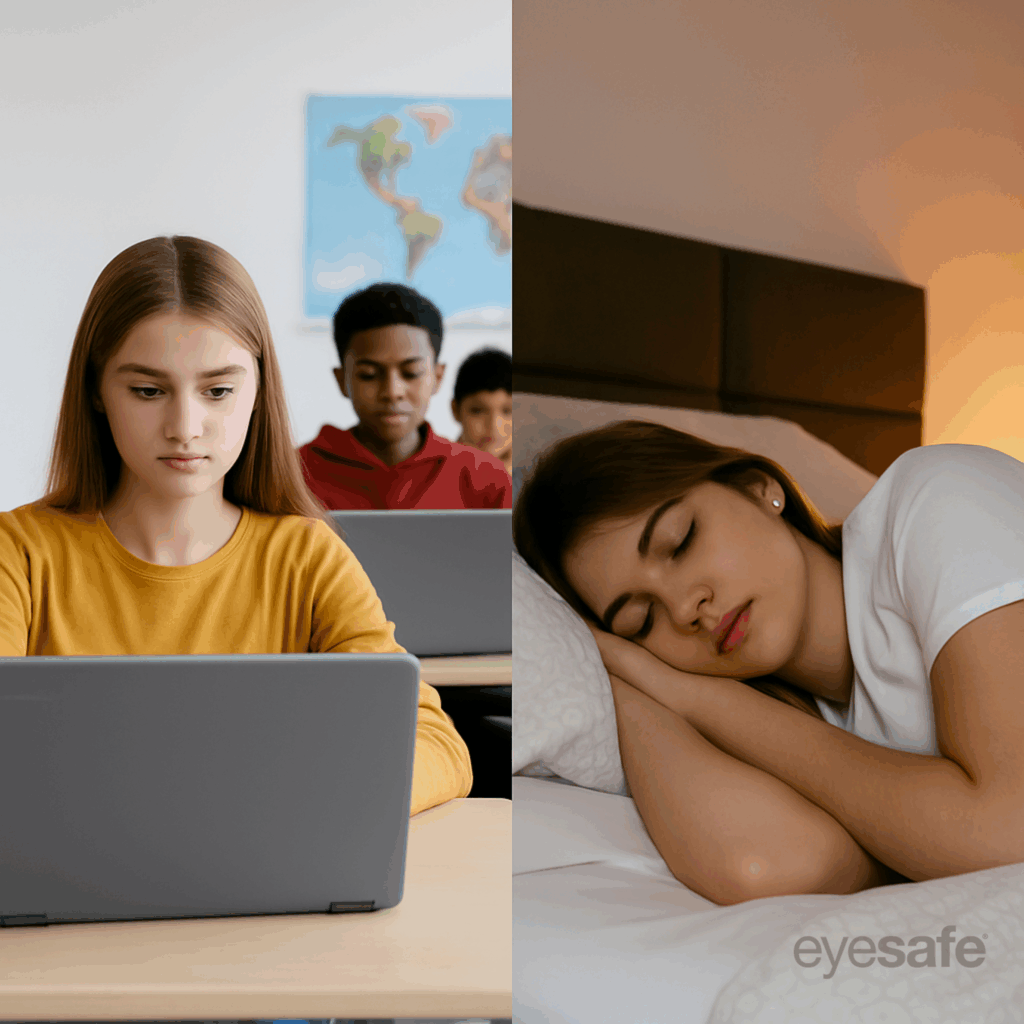
Blue Light & Student Sleep Cycles
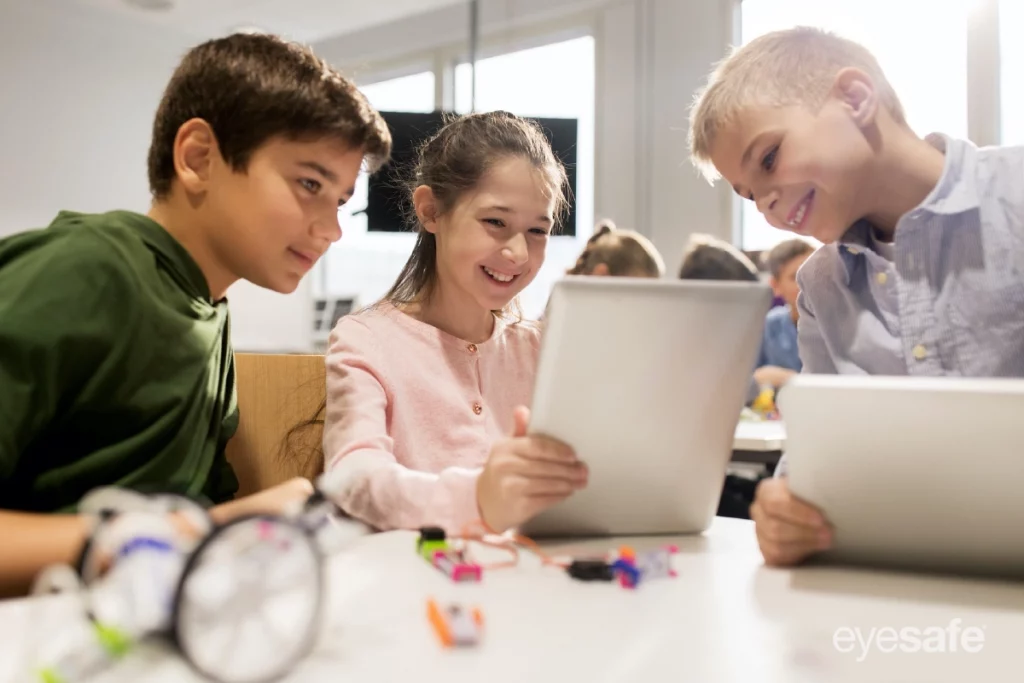
Today’s students spend more time in front of screens than ever before. On average, children ages 8–12 in the United States spend 5 hours a day watching or using screens, …
Today’s students spend more time in front of screens than ever before. On average, children ages 8–12 in the United States spend 5 hours a day watching or using screens, …
Recognizing the increasing reliance on digital devices in classrooms, Lenovo and Eyesafe will bring blue light screen protectors to K–12 schools across the country. These protectors, developed in collaboration with eye care professionals, are engineered to reduce blue light exposure, support eye comfort, and maintain vivid screen color. This initiative reflects both companies’ commitment to developing innovative solutions to support healthier learning environments.
As summer winds down and a new school year approaches, it’s essential to establish healthy routines for your child. Balancing screen time with real-world activities is more important than ever, given the growing use of technology in schools. Excessive screen time can disrupt sleep and affect overall well-being, especially for young children whose eyes are still developing.
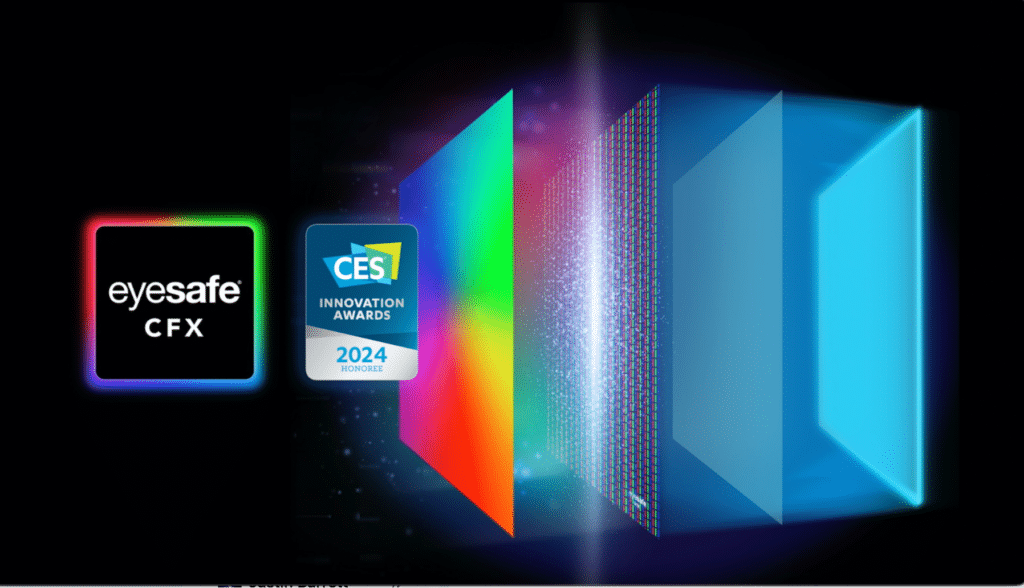
Eyesafe’s ground-breaking color filter technology, Eyesafe® CFX, is a 2024 CES Innovation Award winner. Eyesafe CFX boosts power efficiency and has the potential to deliver energy savings, which may help displays pass regulatory certifications. Moreover, it can improve luminance up to 20%, expand color gamut and reduce blue light emissions.
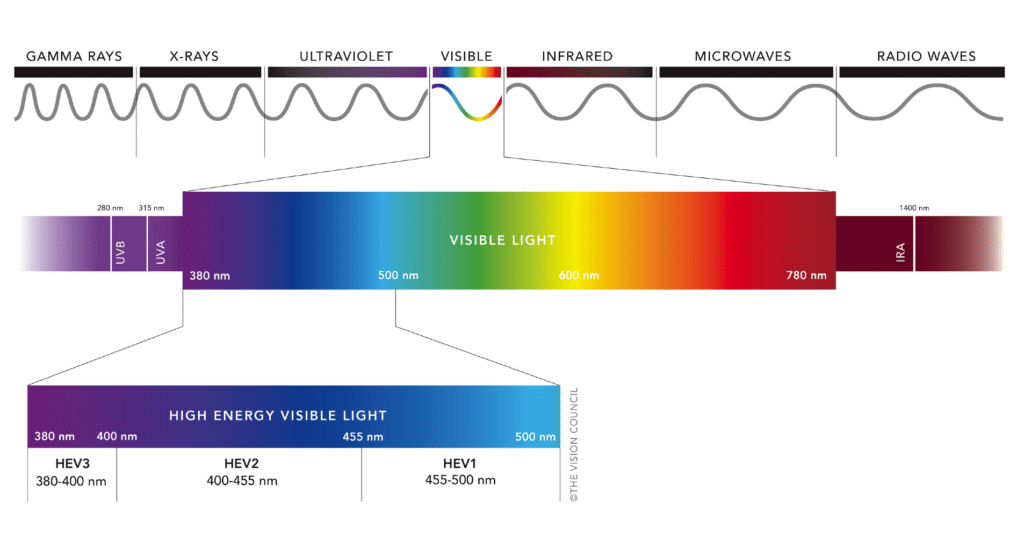
The ANSI Accredited Standards Committee (ASC) Z80 Spectral Bands Task Force was formed in April 2021 to develop terminology/nomenclature for the spectrum of radiation between 380 – 500 nanometer (nm), commonly referred to as “blue light”. The task force included The Vision Council and American Optometric Association, as well as Johnson and Johnson MedTech, Essilor Luxottica, Zeiss, Alcon, Eyesafe, and others. The task force agreed High Energy Visible (HEV) light would be the nomenclature describing the overarching band of radiation between 380 – 500 nm and identified three sub-bands within HEV: 380 – 400 nm (HEV 3), 400 – 455 nm (HEV 2), and 455 – 500nm (HEV 1).
In our increasingly screen-centric world, technology has woven itself into our everyday lives, and education is no exception. From virtual assignments to online research and teacher-student communications, today’s generation of students rely heavily on digital devices for learning. While these tools offer countless advantages, they also come with a significant downside: blue light exposure. To raise awareness of the risks, UnitedHealthcare, CDW, and Eyesafe are hosting a nationwide K-12 webinar on Blue Light Awareness Day, observed every October 10th.
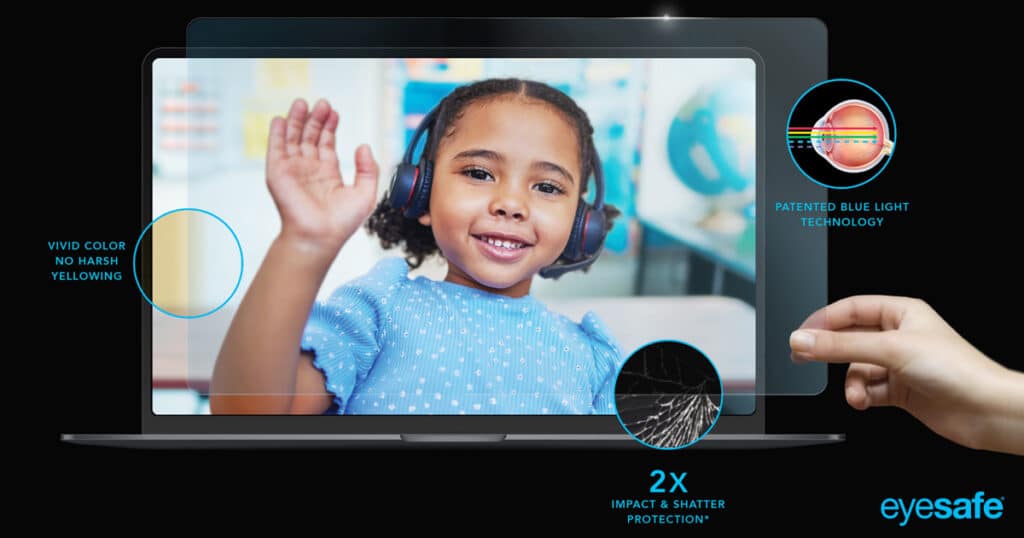
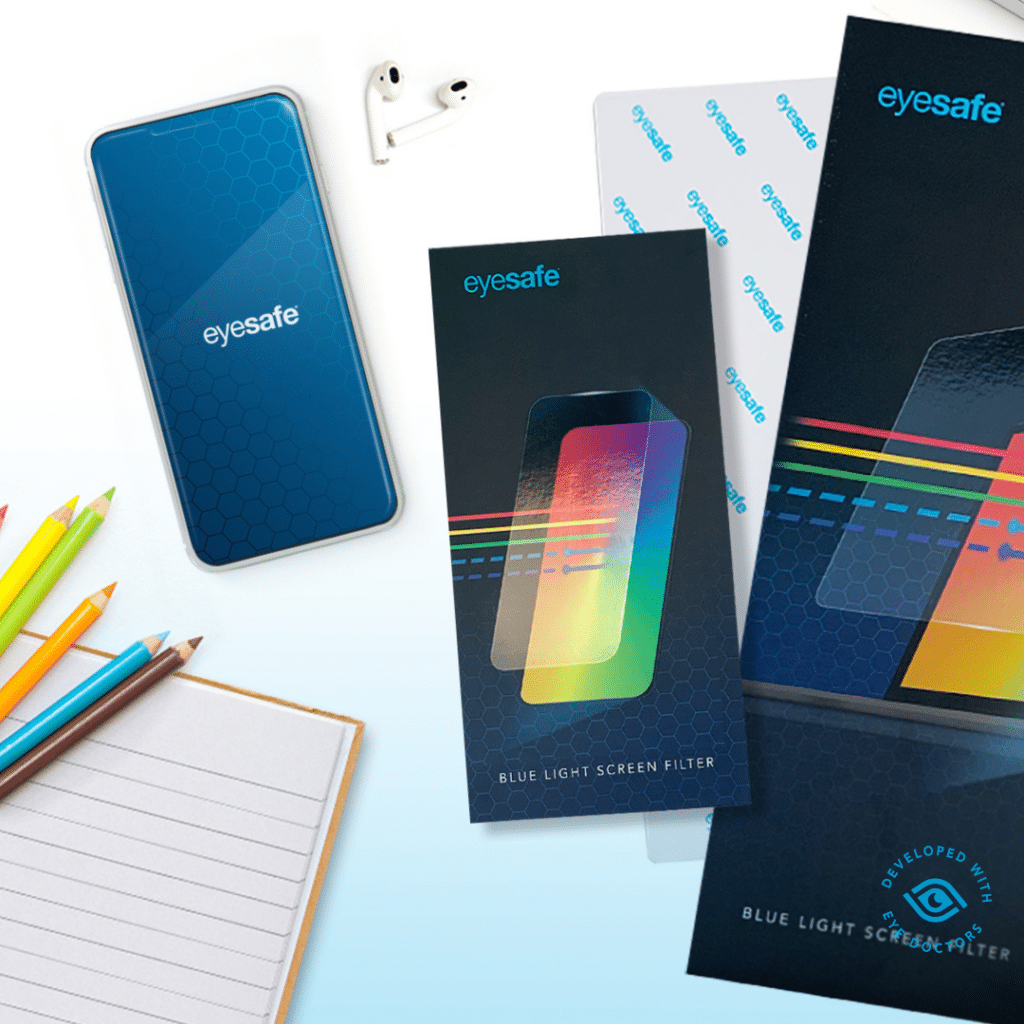
Chromebooks are an essential learning tool for students, but their fragile screens are easily damaged by accidental drops and scratches. In addition, many doctors are concerned by the amount of time children spend on screens, including classwork, social media, video games and TV. Eyesafe Screen Protectors are a cost-effective solution, both in reducing blue light and helping protect students’ devices from scratches, smudges, impact and screen shatters.
Blue light may affect children’s SEL. Here are several ways educators can protect children from the potential impact of blue light exposure.

Eyesafe presented at Lake Worth Middle School to speak about blue light management in the learning environment.
Parents and educators can help kids reduce digital eye strain and promote healthy sleep with ZAGG and Eyesafe blue light blocking products. Minneapolis, USA, Shannon, Ireland and Paris, France, September …