
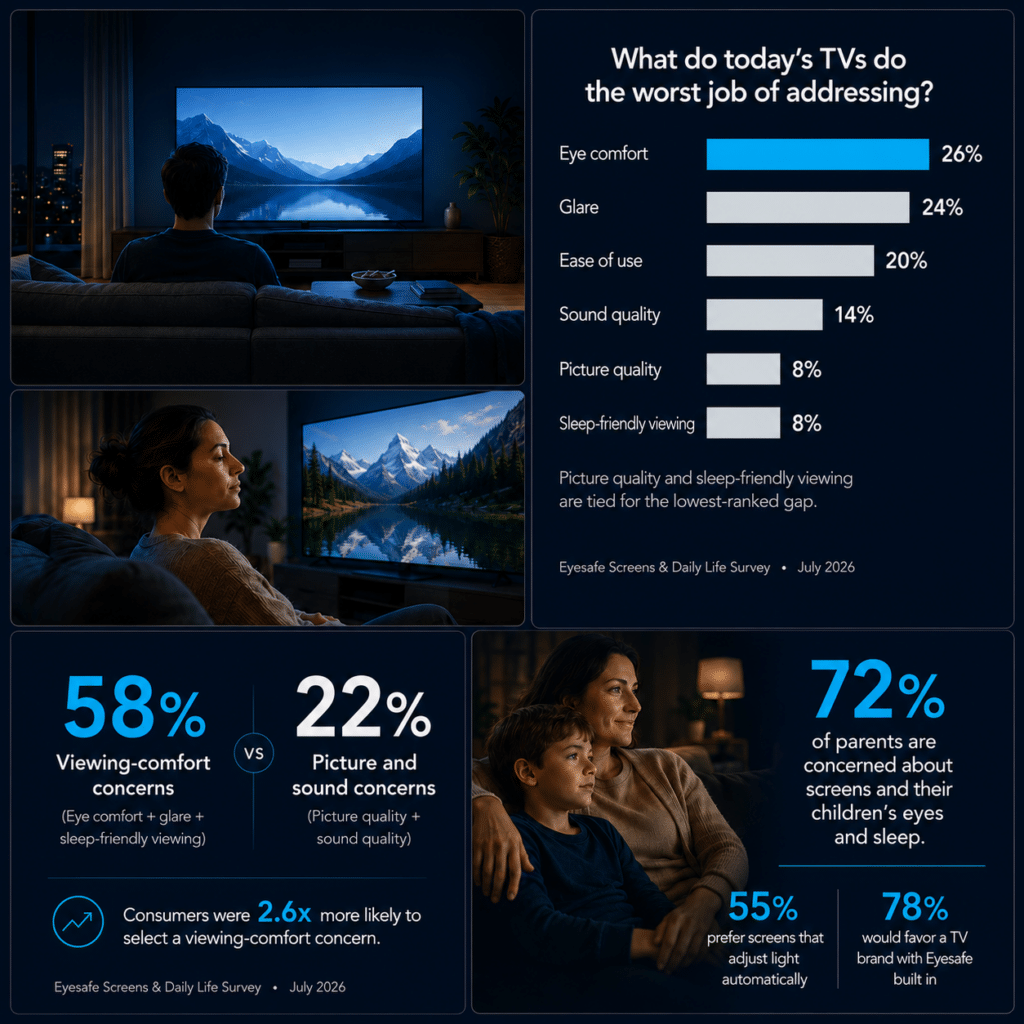
Eye comfort ranked the #1 shortcoming of today’s TVs; picture quality ranked last at 8%. Nearly 4 in 5 consumers would favor a TV brand with Eyesafe built in.
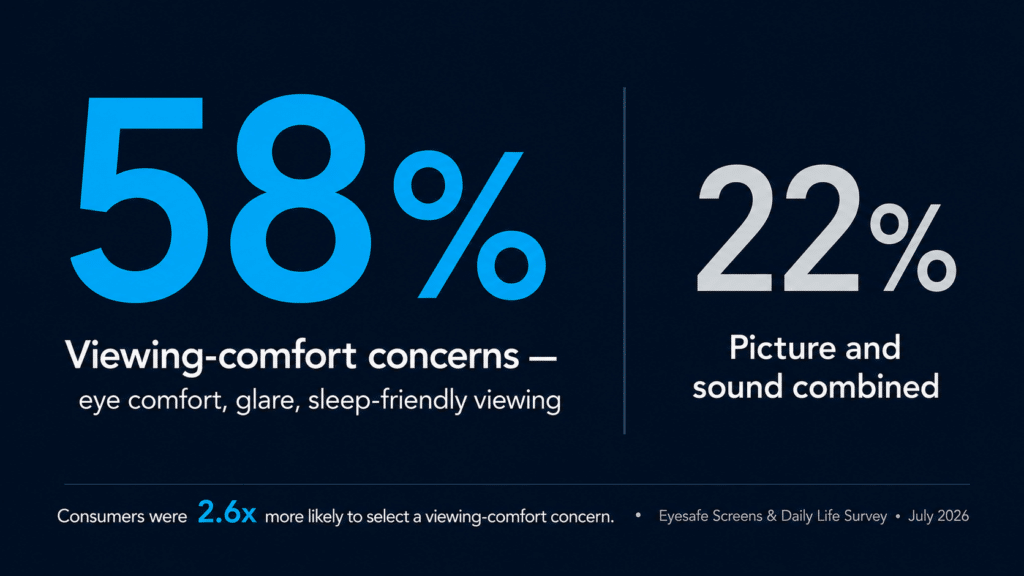
MINNEAPOLIS – July 2026 — After two decades of competing on resolution, contrast, and color, the TV industry may be perfecting the wrong thing. In a new consumer survey, consumers were asked what today’s TVs do the worst job of addressing. Eye comfort during long viewing ranked #1 (26%) — and picture quality ranked dead last, at just 8%. Taken together, nearly 6 in 10 consumers (58%) pointed to viewing comfort — eye comfort, glare, and sleep-friendly evening viewing — as the industry’s biggest gap, versus just 22% for picture and sound combined.
The cost of that blind spot shows up at bedtime. Nearly half of consumers surveyed (47%) said screens caused them to stay up later than they intended in the past month, and “trouble falling asleep” ranked as the single most common effect of evening TV viewing — ahead of eye strain, headaches, and every other symptom measured. Three out of four TV viewers watch television within an hour of going to bed on most or every night, making the TV one of the last light sources Americans see before sleep.
 The fix people have doesn’t get used
 The fix people have doesn’t get used
Most devices now include a night mode or blue light setting — but only 21% of consumers use it consistently. The top reason isn’t skepticism: it’s that people simply forget to turn it on (33%). Asked what they’d actually prefer, 55% chose a screen that adjusts its light automatically through the day over one they manage manually — a two-to-one margin. And 81% said they would use an eye comfort mode if it kept the picture looking completely normal.
Consumers want it built in — and labeled
The survey points to clear demand for display health delivered as a built-in, certified feature:
- 78% would favor a TV brand that built Eyesafe certified technology into its TVs — including 93% of consumers planning to buy a TV in the next 12 months.
- 62% would choose an Eyesafe certified TV that adjusts light for comfort and sleep; just 4% would not.
- 68% would pay more for it — most between $26 and $100.
- 82% say retailers should clearly identify which TVs and devices carry Eyesafe.
- The TV topped the list of devices consumers most want automatic, healthy light built into (67%) — ahead of the smartphone (64%) and laptop (51%).
- Among parents, 72% are concerned about the effects of screen time on their children’s eyes and sleep.
“The industry has spent twenty years winning on picture quality, and consumers are telling us it’s won — just 8% see it as a gap. What they feel now is everything the picture doesn’t solve: comfortable eyes and better sleep, handled automatically, without another setting to manage. That is exactly what we built Eyesafe IQ to do — manage display light intelligently through the day, without compromising the picture. This research confirms the opportunity is real, and it’s immediate.” – Justin Barrett, CEO, Eyesafe
 About the research
 About the research
The “Screens & Daily Life” survey was fielded in July 2026 among 100 U.S. adults (ages 18+) via the AYTM research platform. Figures are reported as percentages of respondents; subgroup figures are reported against their respective bases. Full methodology available on request.
About Eyesafe
Eyesafe® is the worldwide leader in display light health, with technology developed in collaboration with ophthalmologists and optometrists, more than 100 patents and trade secrets, and over 350 million Eyesafe certified and equipped devices shipped with more than 30 Tier 1 OEM partners. Eyesafe standards and technology — including Eyesafe IQ, intelligent display light management — help the world’s leading brands deliver healthier screen experiences without compromising display performance. Learn more at eyesafe.com.