
Strategies to Help Patients Improve their Eye Health
Medically reviewed by Vance Thompson, MD
Over the past two decades, screen time has witnessed a steady increase, surpassing 13 hours per day. This prolonged and excessive exposure to screens can potentially lead to adverse health consequences, including digital eye strain, dry eye, and disturbances in sleep patterns. As a medical practitioner, you are likely familiar with the potential dangers associated with screen time, particularly due to heightened exposure to blue light. Although sunlight remains the primary source of blue light, it’s important to note that digital devices such as laptops, tablets, phones, and TVs also emit small quantities of blue light throughout the day.
According to the American Optometric Association, anterior structures of the eye block and absorb most UV rays from reaching the retina, but blue light passes through the cornea and lens and on to the light-sensitive tissues. Visible blue light that reaches the retina is absorbed by the retinal pigment epithelium (RPE) and certain photoreceptors, generating localized oxidative and thermal stress. In laboratory studies on rodent and primate models, direct retinal exposure to bright blue light for a prolonged time accelerated rates of RPE and photoreceptor death.1
In a recent survey, 94% of eye doctors said they were concerned about screen time and blue light exposure. Blue light education is now surfacing as an essential part of patient care.
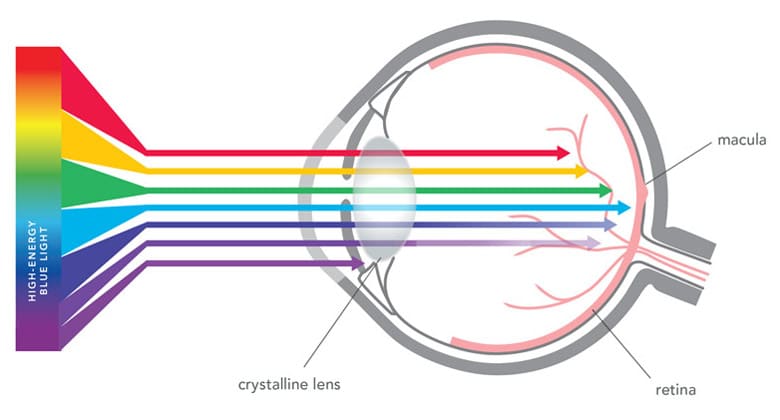
Unlike other forms of light, the eyes cannot effectively filter blue light, so more can pass through the eye to the retina.
What are the Risks?
Although the dangers of UV rays from the sun have been known for years, we are only now recognizing that visible blue light from digital screens (and sunlight) also may pose risks to the health of our eyes. Researchers have found that high-energy blue light – particularly in the shorter wavelength range – produces oxidative and phototoxic damage to cells in the cornea and retina of the eye.2
In 2018, a research study concluded long-term exposure to blue light from portable devices emitting blue light from a short distance may cause potential damage to ocular health, especially in high-risk populations, such as people with dry eye disease (DED), contact lens users, the malnourished and the elderly, due to accumulated oxidative stress that is a result of an imbalance between reactive oxygen species (ROS) generation and scavenging.3
Children may be more vulnerable to blue light because their eyes don’t have the same blue light-filtering ability that adult eyes have. Children also tend to hold devices closer to their eyes, increasing the intensity of high-energy visible blue light reaching their eyes.4
There is evidence that blue light may affect regulation of the body’s circadian rhythm, leading to suppressed melatonin. Too much blue light exposure from viewing screens at night may result in sleep deficiency, which can adversely impact performance, health, and safety.5 While further research is needed to fully understand these risks and establish guidelines, it is important to be mindful of excessive blue light exposure and take measures to mitigate its potential negative effects.
SLEEP
Blue light can inhibit melatonin production, reducing both the quantity and the quality of your sleep when exposed at night.
EYE STRAIN
According to the Vision Council, as many as 65% of Americans report experiencing symptoms of digital eye strain.
DRY EYES
When hyperfocused on a screen that emits blue light for a long period of time, blink frequency may drop and can lead to dry eyes.
DEVELOPING EYES
Children’s eyes are more likely to be sensitive to blue light, and excess screen time may pose long-term risks.
Comprehensive vision care
Supporting your patients with a holistic and comprehensive approach to healthy vision involves a combination of measures, such as eye exams, education on proper eye care, and blue light mitigating solutions. By taking these steps, you can ensure your patients receive the best possible care for their visual health.
Practical approaches to help encourage good eye health for patients
- Encourage patients to schedule regular eye exams, including for family members.
- Look for symptoms of eye health issues and digital eye strain due to excessive screen time, such as dry eyes, headaches while looking at screens, and changes to vergence and accommodation.
- Encourage patients to practice the 20/20/20 rule: every 20 minutes, take 20 seconds and look at something 20 feet away.
- Suggest that patients limit screen time, and keep computer screens at least 30 inches away from their eyes.
- Suggest the use of Eyesafe Certified products, which have blue light mitigation technology built into the device.
- Encourage use of Eyesafe Blue Light Screen Protectors for phones, tablets, monitors and laptops that do not offer built-in blue light technology.
For more tips, please download the Screen Time and Blue Light Guide for Providers.
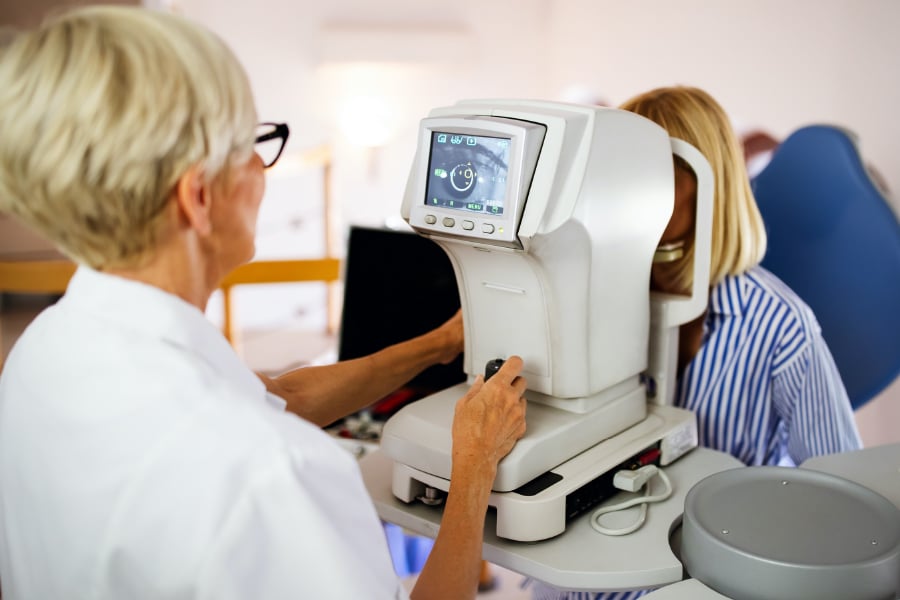
Product solutions designed for health
As an eye care provider, you play a vital role in helping your patients maintain healthy eyes and vision. Comprehensive eye care goes beyond just assessing a patient’s prescription for glasses or contact lenses. It also includes evaluating and addressing potential risks and conditions that can affect eye health, including the impact of blue light exposure.
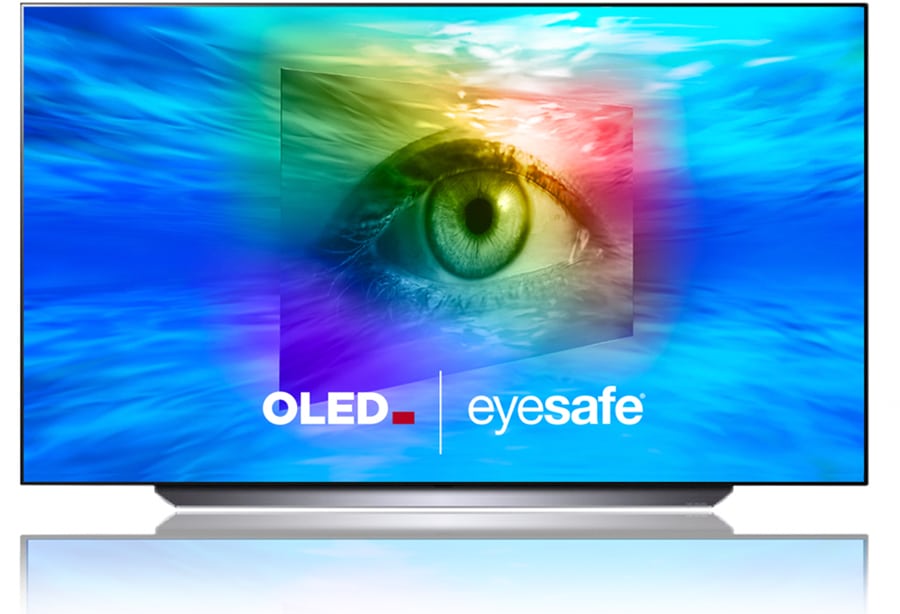
Did you know there are products that can help your patients reduce their blue light exposure? OLED screens emit up to 50% less blue light than LCD TVs, according to LG Display, who is the leading supplier of OLED screens for the television industry. OLED screens maintain perfect black and high contrast characteristics with excellent picture quality, while providing a flicker-free and glare free viewing experience to help support overall eye comfort.
1. Blue Light and our Eyes, American Optometric Association, https://www.aoa.org/news/clinical-eye-care/health-and-wellness/blue-light
2. Research progress about the effect and prevention of blue light on eyes, by Zhi-Chun Zhao, Ying Zhou, Gang Tan, Juan Li, Int J Ophthalmol, Vol. 11, No. 12, Dec. 18, 2018.
3. Protective effects of blue light-blocking shades on phototoxicity in human ocular surface cell, Niwano Y, Iwasawa A, Tsubota K, et al, BMJ Open Opthalmology 2019; 4:eooo217. doi:10.1136/bmjophth-2018-000217
4. Light-emitting diodes (LED) for domestic lighting: any risks for the eye? Behar-Cohen F, et al. Progress in Retinal and Eye Research. 2011 Jul;30(4):239-57.
5. Evening use of light-emitting eReaders negatively affects sleep, circadian timing, and next-morning alertness. Chang AM, et al. Proceedings of the National Academy of Sciences of the United States (PNAS). January 2015. 112(4): 1232-1237. [Accessed December 3, 2019]